Obverse
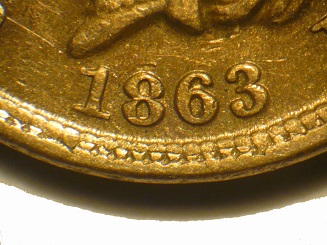
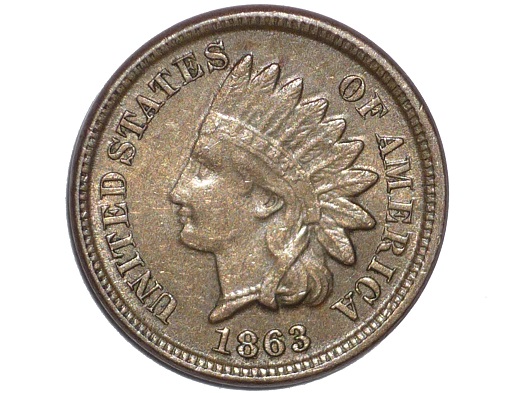
28 is identified by date placement at LE and a die chip located
two-thirds up the fifth feather and situated on the right side.
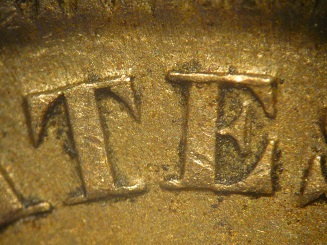
In addition, the right arm of the T and the top of the E of
STATES have been repaired.
Obverse 28 is observed with die flow lines from the denticles to
the tops of the legend and to a lesser extent, in frontof the portait.
The following die state has been observed for obverse 28: Obv. 28a: Obverse 28 continues to degrade, with the entire rim composed of a continuous rim break.
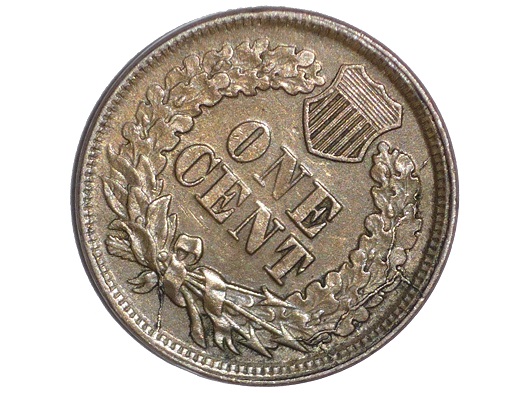
Reverse
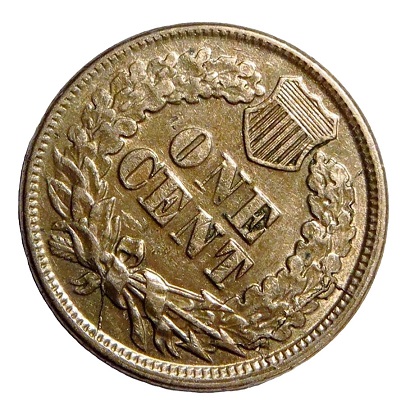
AD is rotated 47 degrees clockwise and is severely cracked on the right
side, with the formation of die cracks in the following locations: 1.
Die crack from the denticles at 1:00 into the right wreath, where
it will continue downward to the middle arrowhead. The crack
lessens in severity as it follows the middle arrow shaft into the
ribbon knot and enters the first olive leaf, where it will exit into
the denticles at 7:15. 2. Die crack from the rim at 2:30 intersects the crack from #1. 3. Die crack from the rim at 3:30 intersects the crack from #1. 4.
Die crack from the denticles at 5:30 travels upward into the
first olivel leaf, where it intersects the die crack from #1.
Comments: The
die states illustrated above for variety 28 are quite interesting in
regards to how differently obverse 28 and reverse AD have degraded with
respect to each other. This contrasting die state progression is
seen in other die marriages as well, where the reverse sustains heavy
die cracking and the obverse remains relatively uncracked.
The
cause of the die rotation of 47 degrees clockwise is unknown to this
author. Perhaps with the publishing of this variety, more
examples will surface so that we may at least ascertain if the rotation
was static or dynamic.
Reverse AD was struck with misaligned dies, with this misalignment observed on all examples of variety 28 I have seen to date.
Plate Coin: Richard Ashton, VF35 (Discovery Piece)