DEFINITIVE
REFERENCE FOR INDIAN CENT DIE VARIETIES
Home
Table of Contents
For Sale List
Numismatic Links
David's Numismatic Blog
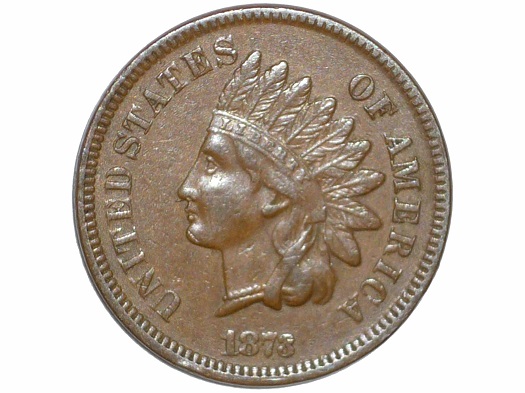
1873 Close
3 Variety 4
Obverse Diagnostics
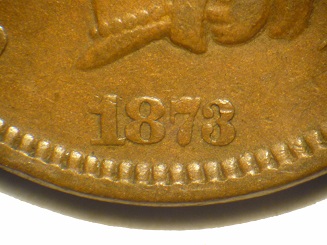
Date Position |
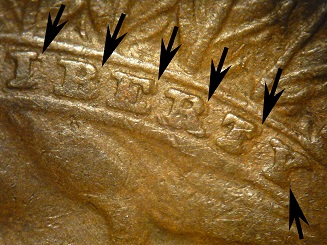
Hub Doubling on IBERTY | 
Broken D of UNITED |
Reverse Diagnostics

Die Crack from 12:45 | 
Die Crack from 3:00 |

Die Crack from 8:00 | 
Clash Mark through C of CENT |
Obverse 3 identified by pivot hub doubling on IBERTY of LIBERTY and date placement at LH.
Reverse
C is rotated 8 degrees counter clockwise and is observed with clash
marks through the C of CENT and to the right of the T of CENT.
Reverse C develops the following die cracks:
1. Die crack from the denticles at 12:45 into the top right of the shield.
2. Die crack form the denticles at 3:00 downward into the wreath.
3. Die crack from the denticles at 8:00 into the first olive leaf.
Comments: Obverse 3 will later be in service paired with Reverse O during the Close 3 Variety 5 die pairing.
1873 Close 3
Obverse 3 is a product of pivot hub doubling during initial hubbings
from the working hub. As a result, doubling may only be seen on
the central portion of the obverse.
The broken D of UNITED is a
result of the D being broken on the working hub, which transfers its
image to the working die. Therefore, the broken D is not an
absolute diagnostic for 1873 Close 3 Variety 4 because the working hub
was in service hubbing multiple working dies.
1873 Close 3
Variety 4 may be located with some searching, but examples below VF30
may not show the doubling very well due to wear. It is my opinion
that most examples reside in the lower circulated grades where LIBERTY
is weak or nonexistent.
Plate Coin: Richard Ashton, VF35