DEFINITIVE REFERENCE FOR INDIAN CENT DIE VARIETIES


Home
Table of Contents
For Sale List
Numismatic Links
David's Numismatic Blog

1881 Variety 11


Obverse 15

Reverse O


Obverse Diagnostics


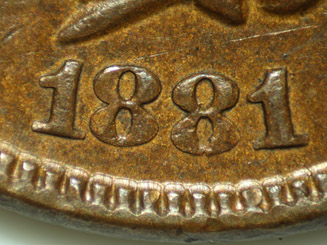
Date Position

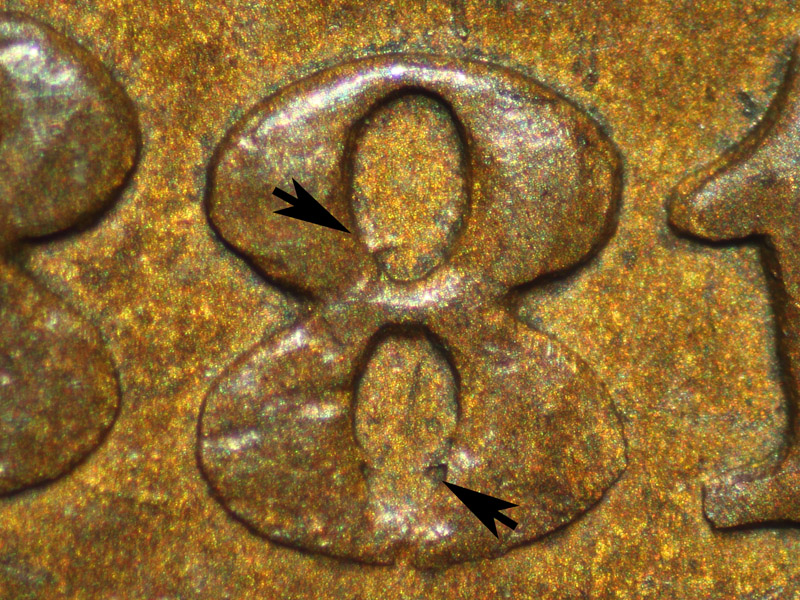
Repunched Second 8 (Click Image To Enlarge)


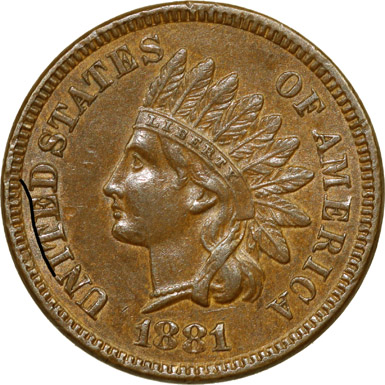
Obverse 15 Die Crack Mapping


Reverse Diagnostics


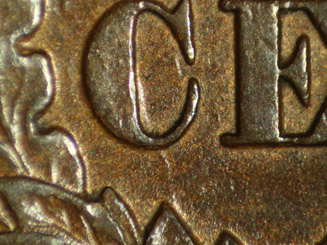
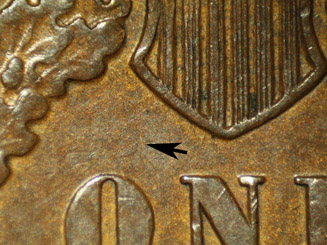
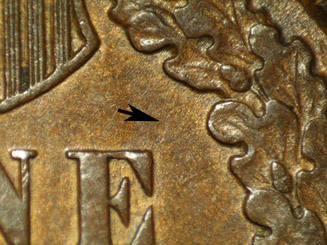
Macro Photography Of Reverse O Clash Marks

Clash Mark Through (C)ENT

Clash Mark Above (O)NE


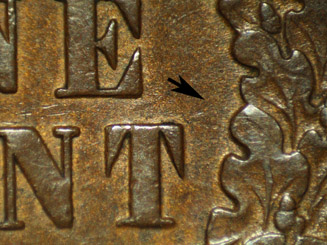
Macro Photography Of Reverse O Clash Marks

Clash Mark Above ON(E)

Clash Mark To Right Of Denomination


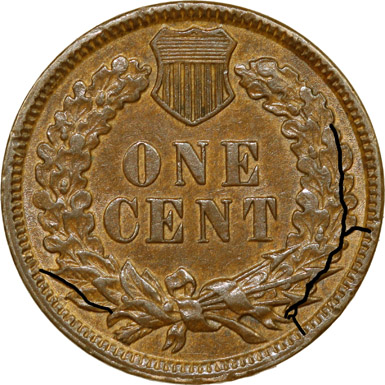
Reverse O Die Crack Mapping


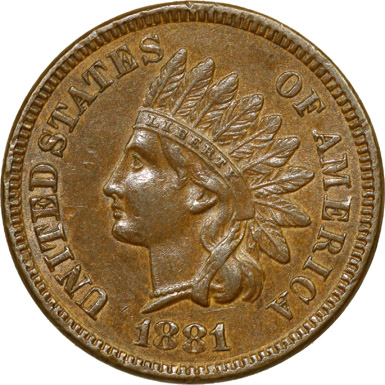
Obverse 15 is identified by date placement at LH and date repunching that features initial date impressions to the north within the loops of the second 8.  Obverse 15 has developed the following die crack:
1.  Light die crack from the denticles at 9:15 that extends downward and connects the tops of 'UN(ITE)D'.

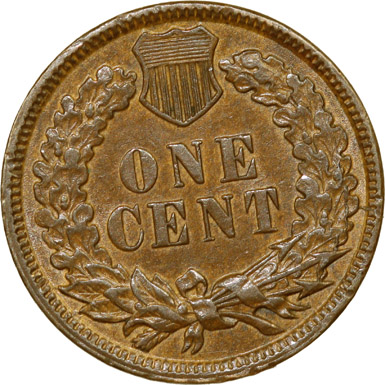
Reverse O is rotated 7 degrees counter clockwise and has acquired clash marks through (C)ENT, above (O)NE, above ON(E) and to the right of the denomination.  Reverse O has developed the following die cracks:
1.  Heavy die crack from the rim at 3:30 extends into a second heavy die crack that extends from within the wreath at 2:00, through the middle and lower arrowheads and exits into the rim at 4:45.
2.  Die crack from the denticles at 8:00 extends downward through the upper and middle olive leaves to the lowest olive leaf.

Comments:  I suspect that Obverse 15 clashed with Reverse O, though the clashing event was relatively light and yielded lightly impressed clash marks that are not discernible on Obverse 15 of the above plate coin. The clashing event between Obverse 15 and Reverse O occurred during a 7 degree die rotation, which is a static rotational attribute of Variety 11.

Plate coin:  Courtesy of David Killough Collection, AU50

Return to 1881 Varieties Table

Return to Date and Die Variety Analysis