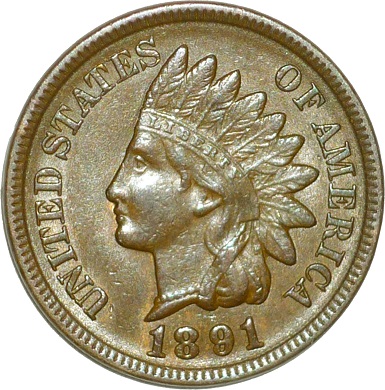
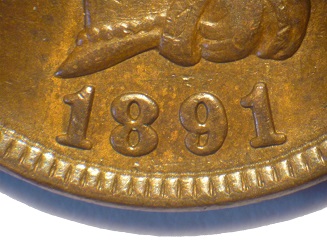
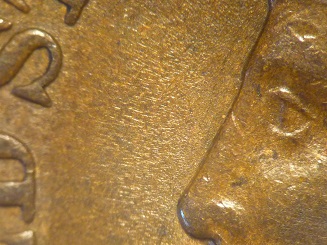
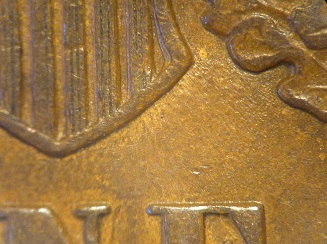
Obverse 10 is observed with date placement at RH and has developsed moderately heavy die flow lines.
Reverse
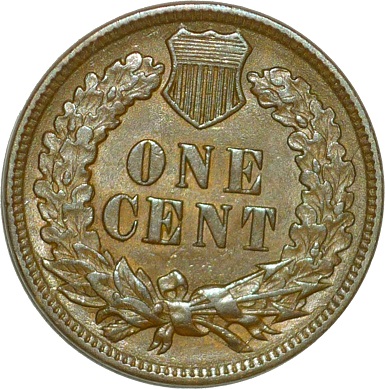
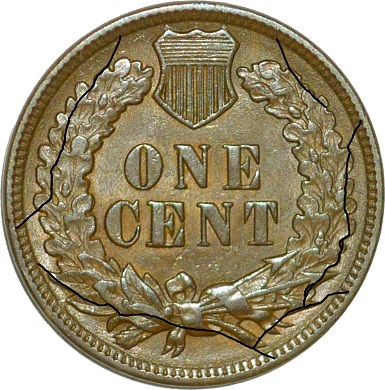
J is rotated 5 degrees clockwise and is in a similar die state as
obverse 10, with the presence of moderately heavy die flow lines.
Reverse J has developed the following die cracks: 1. Die crack from the rim at 1:00 down through the wreath to the second oak leaf on the outside of the wreath. 2. Die crack from the rim at 2:15 down through the wreath to the middle and lowest arowheads. 3. Die crack from the rim at 4:00 through the lowest arrowhead to the wreath stem. 4. Die crack from the rim at 5:00 through the lower wreath to the denticles at 8:00. 5. Die crack from the rim at 8:30 upward through the wreath to the denticles at 11:00.
Comments: Variety 7 is
characterized by the numerous die cracking of reverse J and the
unscathed obverse 10. Many examples of such die state
progressions exist where the anvil die (reverse die) suffers die
cracking and/or breakage whereas the hammer die (obverse die) fairs
much better.