DEFINITIVE REFERENCE FOR INDIAN CENT DIE VARIETIES
Home
Table of Contents
For Sale List
Numismatic Links
David's Numismatic Blog1880 Variety 3
Obverse
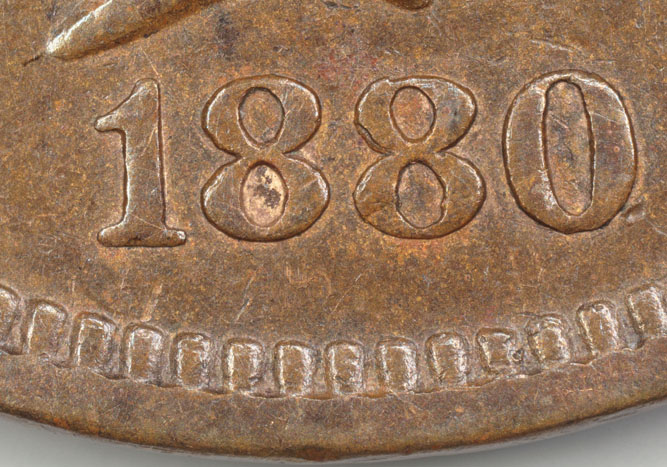
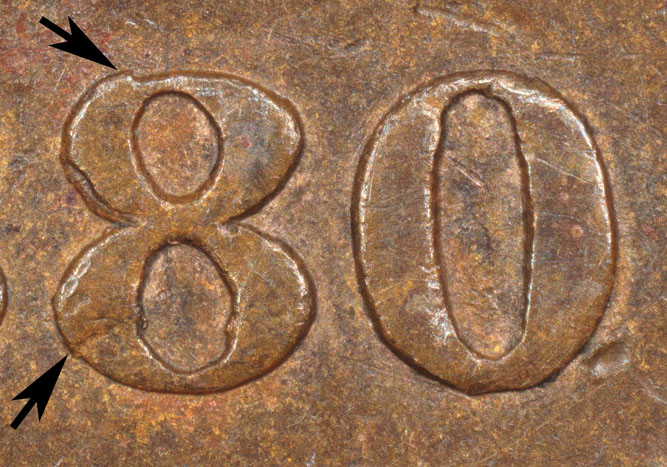
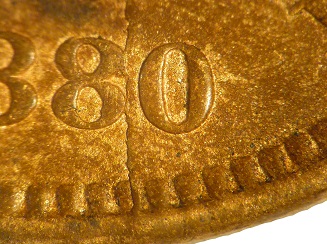
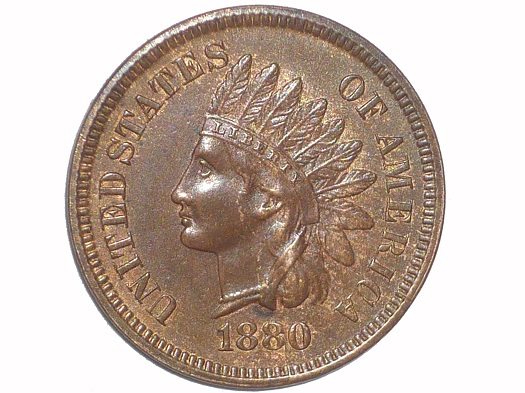
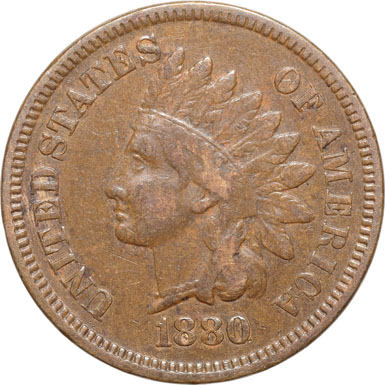
5 is identified by date placement at C, with the second 8 of the date
broken at the top and bottom. The following die state is observed
for obverse 5:
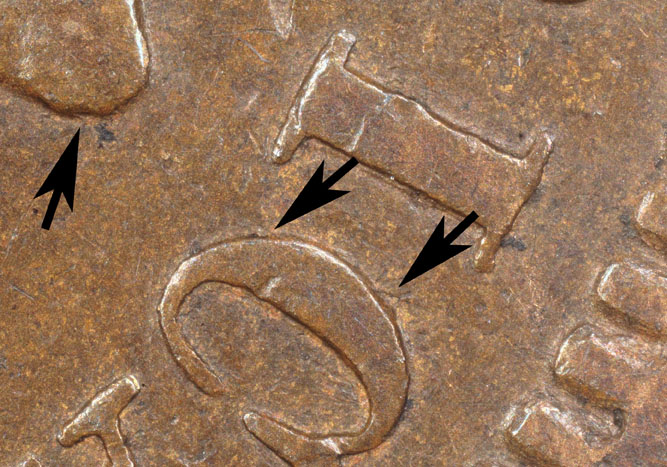
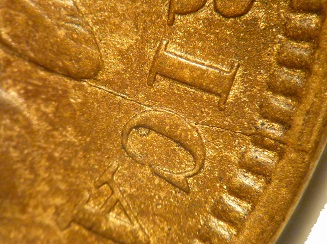
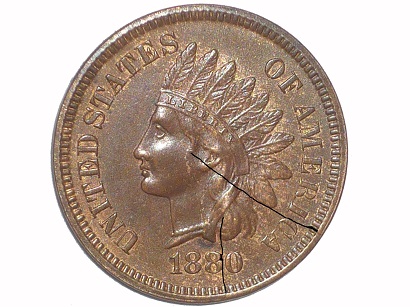
Obv. 5.2: Radial die cracks from the rim at
4:15 and 5:45 into the fields and entering the portrit. The crack
from 4:15 is extensive reaching the first hair curl.
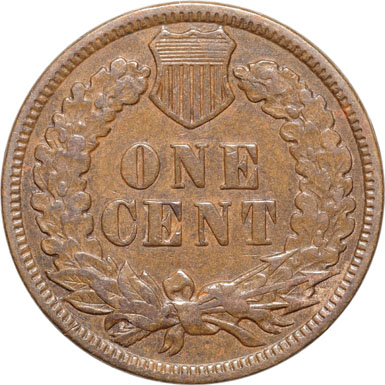
Reverse F
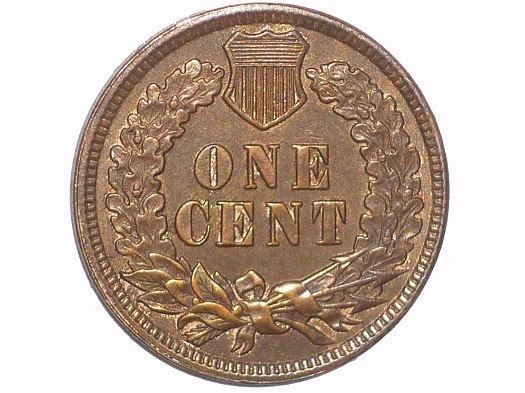
may be identified by a hub-through artifact within the left wreath from
1:30 to 2:30. The folllowing die state is observed for reverse F:
Rev. F.2: Die crack within the wreath from 9:45 to 10:30
Comments: The
obverse 5 die crack from the rim at 5:45 creates a bi-level field below
the portrait. The field to the right side of the die crack is at
a lower level within the die compared to the left side. The
obverse 5.2 die state seems to be rare, as this is presently the only
example I have seen.
The degradation of of the second 8 is the
first deterioration that occurs on this date punch. Initially,
the second 8 will develop a break at the top and then the bottom will
break. The next deterioration to occur on this date punch is the
breakage of the base of the first 8. Finally, the 0 will break at
the base.
Plate Coin: AU50 (cleaned), D. Poliquin collection