DEFINITIVE REFERENCE FOR INDIAN CENT DIE VARIETIES


Home
Table of Contents
For Sale List
Numismatic Links
David's Numismatic Blog

1897 Variety 17


Obverse 19

Reverse S


Obverse Diagnostics


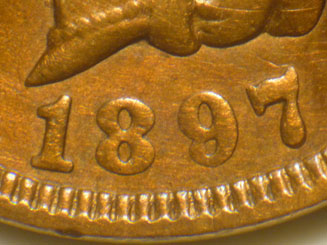
Date Placement

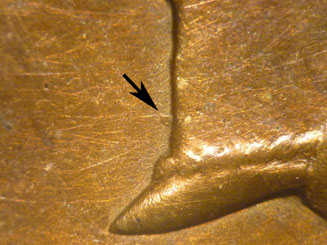
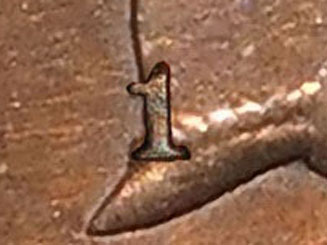
Misplaced Small 1 In The Neck

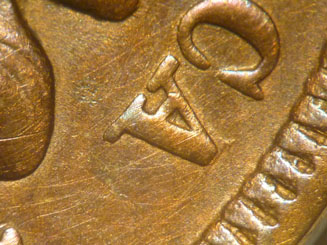
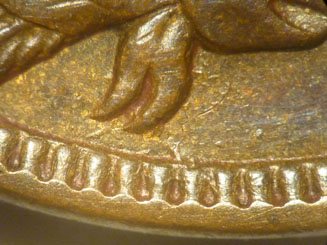
Working Hub Artifacts Around Final A Of AMERICA


Reverse Diagnostics


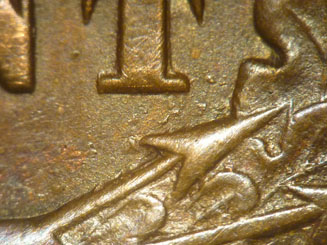
Die Rust Below The T Of CENT

Die Rust By The Left Ribbon End

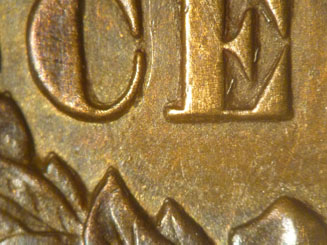
Clash Mark Through The C Of CENT


Obverse 19 is identified by date placement at LH, the misplaced serif of a small 1 digit in the neck and working hub artifacts around the final A of AMERICA.  Obverse 19 has developed light to moderately heavy die flow lines.

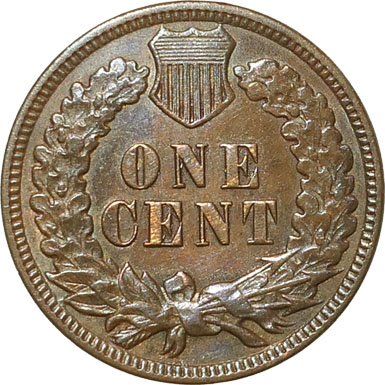
Reverse S may be identified by the formation of die rust below the T of CENT and by the left ribbon end.  Reverse S is in a similar die state as Obverse 19, with the advancement of light to moderately heavy die flow lines.  Reverse S has acquired a clash mark through the C of CENT.

Comments:  The Obverse 19 misplaced serif of a small 1 digit is much smaller than the serif of the 1 digit of the date; however, the misplaced serif is the approximate size of the serif of a 1 digit from an 1897 Barber Dime digit punch.  Could the misplaced digit in fact be the result of a Barber Dime digit punch impression?

The following image illustrates an ovelay of a 1 digit from a Barber Dime digit punch from 1897.  The overlay is not accurate in regard to orientation of the Obverse 19 misplaced digit impression, but is designed to illustrate how the smaller 1 serif of a Barber Dime explains the small misplaced digit of Obverse 19.


Overlay Of Barber Dime 1 Digit

As evidenced by the above overlay, the smaller serif size of the Barber Dime 1 digit fits the impression of the Obverse 19 misplaced digit punch impression.  However, my Barber Dime digit punch theory is designed to be one possible solution to the small sized misplaced digit impression and should be viewed as only a possibility.

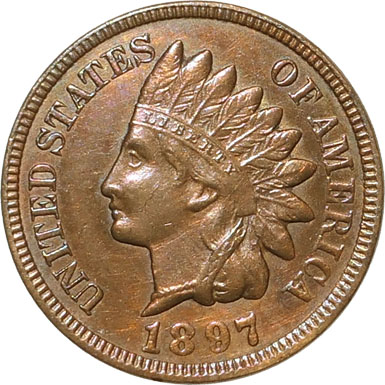
Plate coin:  Courtesy of David Killough Collection, AU details

Return to 1897 Varieties Table

Return to Date and Die Variety Analysis